What 209 accounting firm leaders told us about AI readiness, and what the firms that feel ready have in common.
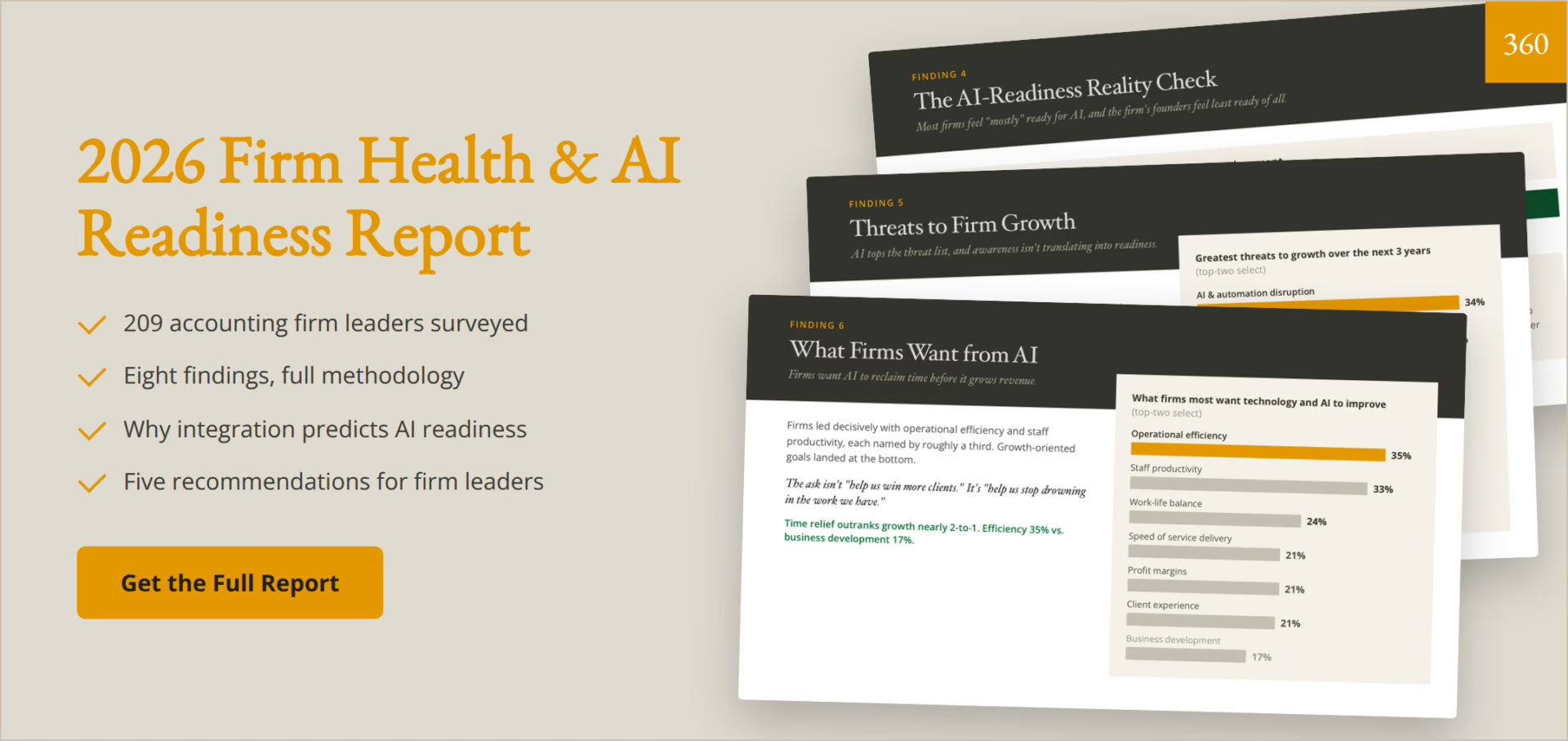
Ask an accounting firm leader whether AI will reshape the profession and you’ll get a quick yes. In our new 2026 Firm Health and AI Readiness Report, AI and automation disruption topped the list of threats to growth, named by 34% of the 209 firm leaders we surveyed. That puts it ahead of cybersecurity and increased competition.
Ask whether their firm is actually ready for it, and the answers get quieter. Only 22% of leaders said they feel extremely prepared to compete in an AI-driven environment. Even more interestingly, the firms that named AI as a top threat were less likely to feel ready than the firms that didn’t: 53% versus 61%.
So what separates the firms that feel ready? In our data, it wasn’t headcount, specialization, or growth rate. It was the plumbing.
The four-times finding
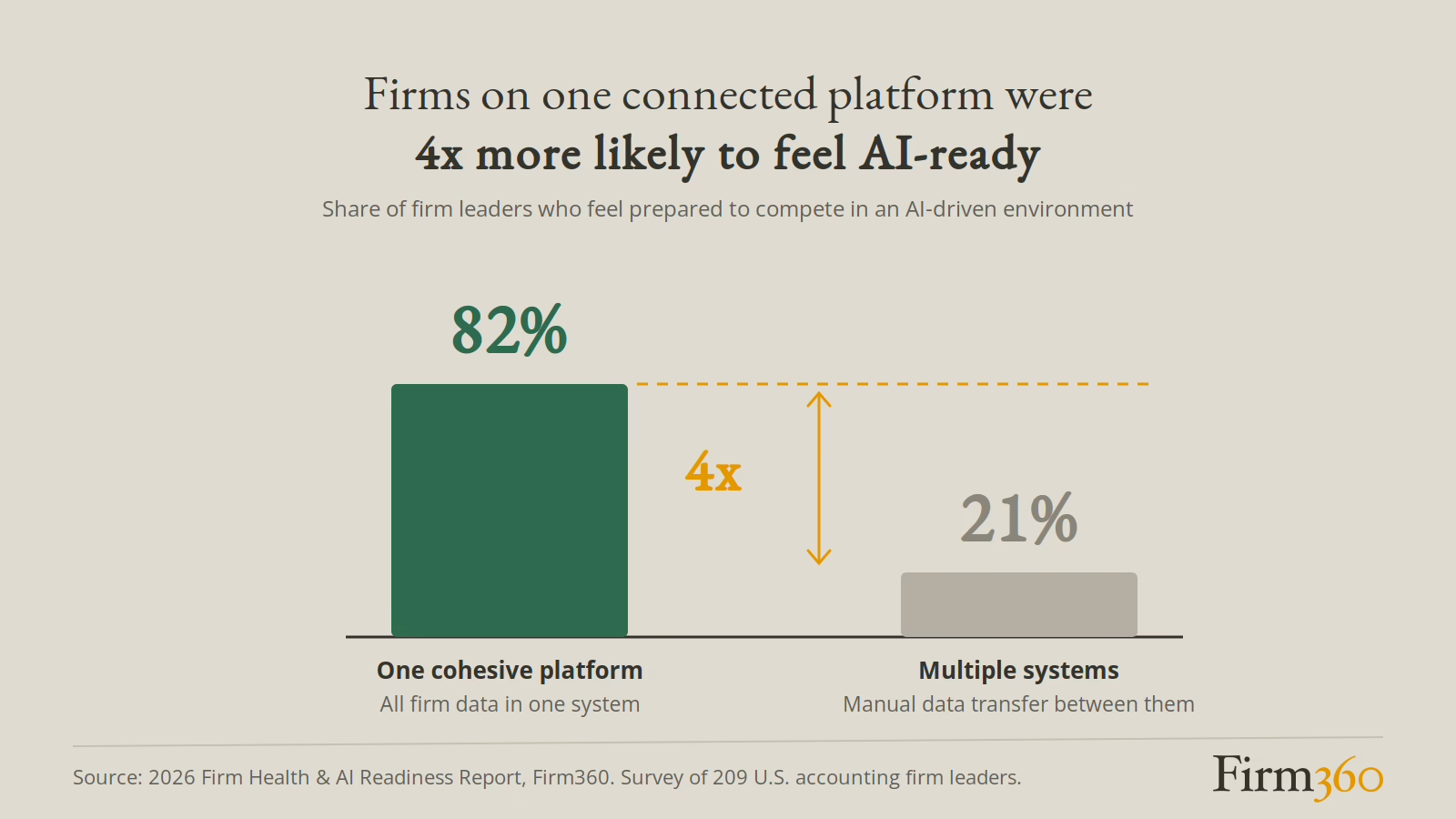
No variable in the survey tracked AI readiness more closely than how connected a firm’s systems are. Firms running on a single cohesive platform were roughly four times as likely to feel AI-ready as firms running several systems with manual data transfer: 82% versus 21%.
The reason is data. A firm whose information already flows through one platform can point AI at clean, centralized records. A fragmented firm has to rebuild its plumbing first.
The broader research says the same thing
This pattern isn’t unique to accounting. Gartner predicts that “through 2026, organizations will abandon 60% of AI projects unsupported by AI-ready data,” in the words of Roxane Edjlali, Senior Director Analyst at Gartner. In the same research, 63% of organizations either lacked the data management practices needed for AI or weren’t sure they had them.
The cost of skipping that groundwork is steep. A widely covered MIT study found that 95% of corporate generative AI pilots delivered no measurable return. AI initiatives don’t fail at the model. They fail at the data underneath it, which is exactly where accounting firms can act today.
What fragmentation actually costs
Disconnection has a price long before AI enters the picture. Two-thirds of firms in the survey lose at least an hour per person, per week to re-keying data, chasing approvals, and reconciling systems, and 38% lose four hours or more. One managing partner in the survey put it plainly:
“We’ve got six different tools and none of them talk to each other, so I’m constantly wondering which one has the right information.”
That sentence could have come from almost any firm we’ve worked with. Fancher Sargent, managing partner at CRS CPAs, a 50-person Tennessee firm, described life across five disconnected systems the same way:
“Onboarding a new client meant setting them up in five different places.”
The strangest part is how invisible the overhead becomes. “We didn’t even realize how disjointed it all was until we tried to clean up our data,” Sargent said. “It was becoming unmanageable. Frankly, I don’t know if I’d still be in this role if we hadn’t made a change.”
Consolidation is the unglamorous fix
The survey’s clearest takeaway is that readiness follows infrastructure, and the firms that consolidated describe the payoff in strikingly practical terms. The numbers from consolidated firms echo exactly what survey respondents say they want back: time.
- CRS CPAs now saves an estimated 200 hours every week across the firm, or two to four hours per employee. That’s the survey’s “manual work tax” refunded.
- CB Accounting cut administrative work by 42% and reduced new-employee onboarding from three months to two weeks. “The automated client reminders have probably saved us two seasonal employees.”
- Lally Group automated recurring billing entirely, taking invoice generation from a monthly project to zero hours.
The firms moving now are moving from strength
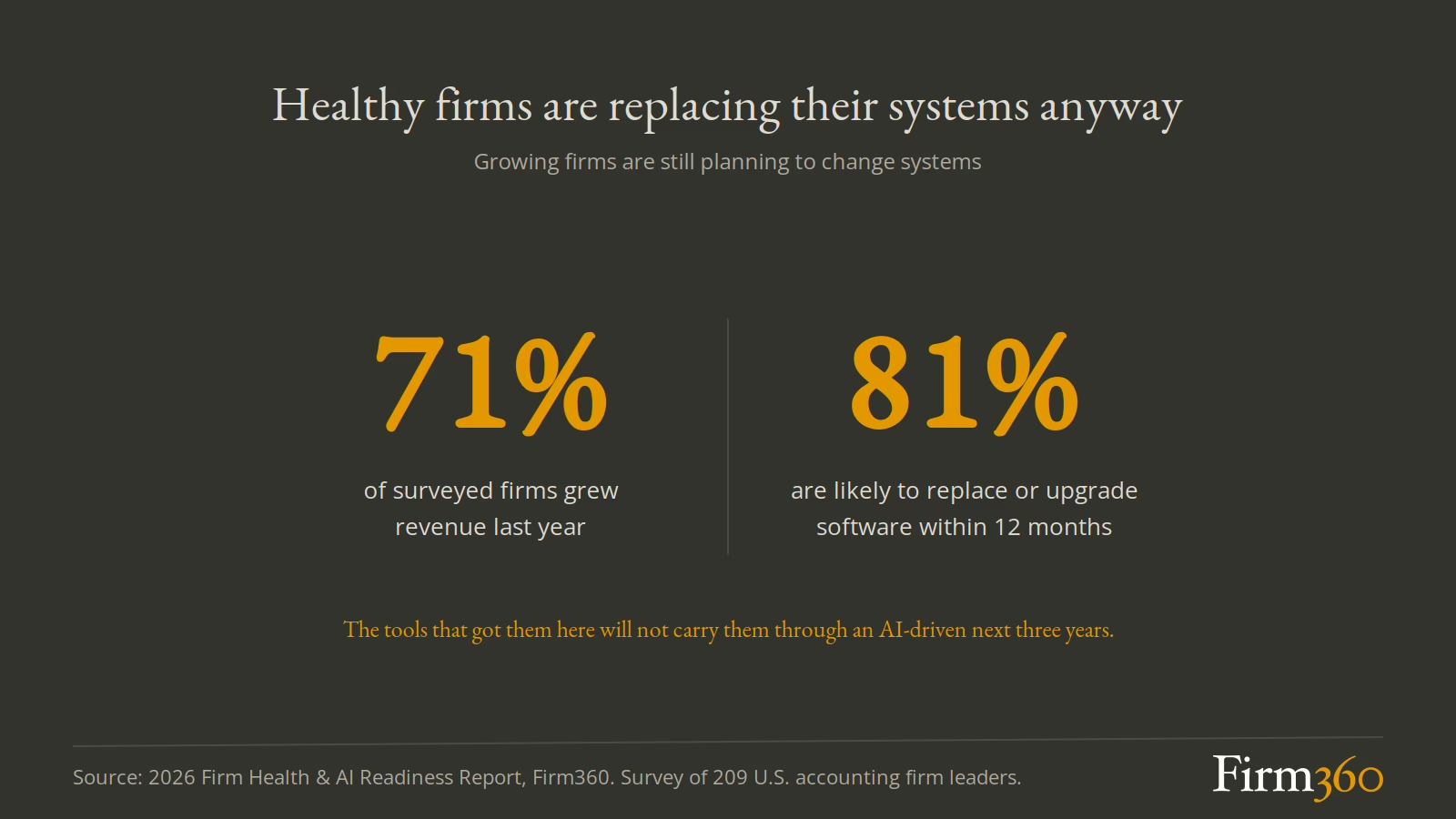
Here’s the finding that should get every firm leader’s attention: 71% of surveyed firms grew last year and 76% are confident in their three-year prospects, yet 81% say they’re at least somewhat likely to replace or upgrade their operational software within 12 months. Healthy firms don’t usually go shopping for new systems. These ones are, because they sense the tools that got them here won’t carry them through an AI-driven next three years.
Where to start
If the report has a single prescription, it’s this: treat integration as your AI strategy, for now. Measure your own manual-work tax by asking your team how many hours a week they lose to work the software should handle. For 38% of firms, that number is four hours or more. Then consolidate before the pressure arrives, because changing systems in a crisis is the worst time to do it.
Read the full 2026 Firm Health and AI Readiness Report here.