While many clients wish to avoid extensions, for practices they’re a necessary overflow. There’s more work to be done in the narrow initial filing period than most firms can reasonably be expected to complete, and the extension is the release valve.
The catch is that the valve creates a second season. The spring crunch resolves by moving work into the extension period, and unless that period has a structure of its own, the same crunch reassembles in the fall — with fewer options, because there is no third deadline.
The workflow below draws on Brandon Gray, CPA, co-founder of Firm360 and founding member of Banks, Gray & Crumpler, PLLC. His firm prepares both business and individual returns, which means it runs the extension cycle twice each spring and carries the extended queue all the way to the fall deadlines.

This article focuses on the operational side: the trigger that moves a client into extension status, the filing and payment stage, the communication that keeps extended clients from feeling forgotten, and the rhythm of work across the extended months. Which forms apply and what a client owes are questions for your firm’s professional judgment. This is about the workflow around them.
Why Extensions Need Their Own Workflow
Extensions carry a filing obligation and, often, a payment the client owes — both on a deadline the firm is responsible for tracking. Defining the path a return takes through an extension is what keeps the request filed on time, the payment confirmed rather than assumed, and the return moving back into production instead of sitting until someone notices.
How do CPA firms manage tax extensions?
Tax extensions are a branch within the tax preparation workflow: a defined trigger moves the return into extension status, the extension request is filed and any payment coordinated with the client, and a structured follow-up rhythm carries the return to completion before the extension period closes.
The Tax Extension Workflow, Stage by Stage
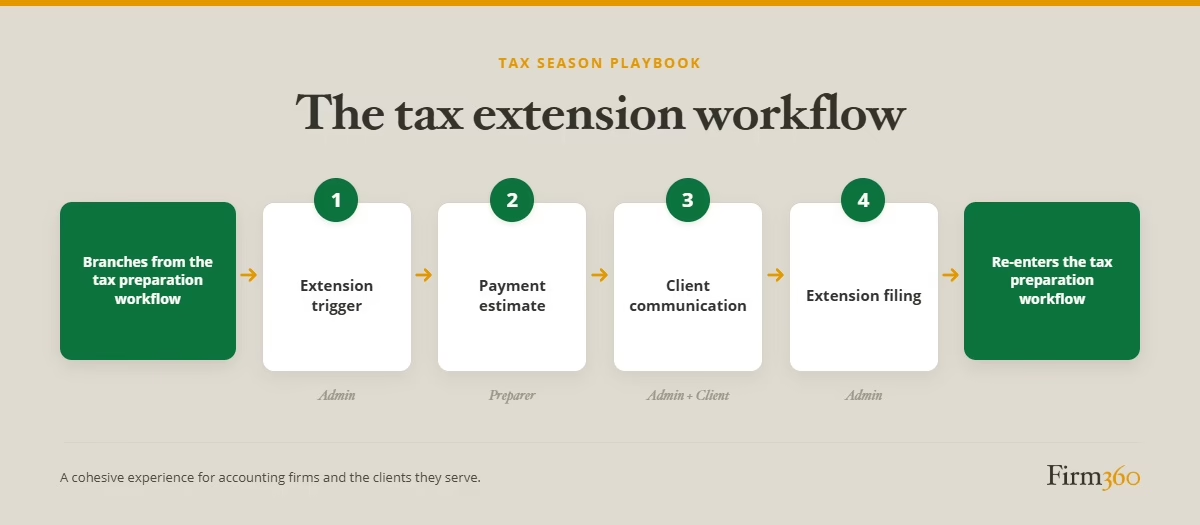
The trigger
The decision to extend a return should be based on pre-defined trigger events. The cleanest definition is a firm cutoff date: past this date, a return that isn’t ready to file gets extended.
Beyond the cutoff itself, several situations commonly move a return into extension status: missing documents, complexity that warrants additional research, a client who needs more time to work through a result they didn’t expect, or a firm that’s simply over capacity.
The payment estimate
Where a payment is due, the estimate needs to be calculated before reaching out to the client. That sequence matters, since a client asked to remit can’t act on an amount the firm hasn’t determined yet. Build enough lead time into the workflow that this work isn’t happening at the last minute.
Explaining the extension to the client
With the estimate in hand, the client can be notified in clear terms: what the extension means, what it doesn’t, what the client still owes and by when, and when the return is now due. Whatever your firm’s guidance on the specifics, the workflow requirement is the same — ideally the client hears it in writing when the extension is filed, not after something has gone wrong.
The extension filing
Whether you’re extending one return at a time or batch filing extensions, this stage includes preparing and transmitting requests, capturing confirmations and monitoring for rejections, and updating return statuses.
Where a balance is due, the payment has to be sent as well, and there’s more than one path for that:
“For payments due, there are a couple of different protocols we follow, depending upon what the client is comfortable with. Some are comfortable using the payment function in our software. For those who aren’t, we send a copy of the extension to the taxpayer and instruct them how to go online to make the payment themselves.”
— Brandon Gray, CPA firm owner and co-founder of Firm360
Either path works. What doesn’t is assuming the client handled it — whichever route they take, the workflow needs a step confirming the payment went out.
Batch Filing As You Approach the Cutoff
Filing one extension at a time scales poorly. Once the cutoff trigger has been met, batch filing is the more efficient way to submit extension requests, and Gray’s firm schedules its batches slightly ahead of both major extension deadlines:
“Because we prepare both business and individual returns, we typically batch file extensions two weeks before each of those deadlines, around March 1 and April 1.”
— Brandon Gray, CPA firm owner and co-founder of Firm360
After the Extension Filing
Once an extension is filed and any necessary payment submitted, the return re-enters the overarching tax preparation workflow. There are, however, some nuances to the post-extension period.
The first is timing. Many entity returns come due ahead of individual work, and some are due in five and a half months instead of the traditional six, so the extended queue arrives in two to three waves rather than one.
The second is that there are no additional extensions. Returns that aren’t completed by the end of this period will become even more critical in the fall.
Thankfully, nothing about the work itself changes. It’s the same sequence as the spring — collect what’s missing, prepare, review, and deliver. Worked as a weekly queue, it stays manageable.
Communication during the extension period
The client notification at the time the extension is filed sets expectations: what the extension changes, what it doesn’t, what’s owed now, what happens next.
Everything after that is follow-up, and it deserves the same cadence you’d run in peak season. Where documents are still missing, reminders continue. Gray’s firm escalates from automated reminders to direct outreach, with different paths depending on whether the return has been started.
“First, we use Firm360 to send weekly automated document request reminders… for returns that have already been started, the preparer takes responsibility for pinging the client about missing information. They know which clients to follow-up with each week based on their Firm360 dashboard, and we ask that they document their outreach in the Activities tab. If this drags out longer than it should, they escalate to a partner. For returns that haven’t been started, our office manager reaches out personally to those clients who haven’t responded to the automated reminders.” — Brandon Gray, CPA & Firm360 Founder
Motivating clients who still owe documents
Gray’s firm also gives clients a reason to move:
“We pre-schedule return delivery so clients know if they get all their documents to us by “X” date, we’ll deliver by a particular date.” — Brandon Gray, CPA firm owner and co-founder of Firm360
The same approach works during the spring crunch, but it earns more during the post-extension period, when client engagement is more sporadic.
Where Extension Workflows Most Commonly Break
The missed payment. The extension is filed but the client doesn’t make the payment that was due. The firm finds out in the summer, when a notice arrives. The fix is a confirmation step: the workflow isn’t done when the extension transmits, it’s done when payment is confirmed.
The summer hold. Extended returns sit while staff and clients take the time off they’ve earned. Some of that is unavoidable. Letting the queue go unattended isn’t, and it turns three months of slack into a compressed fall.
The fall scramble. If returns are largely left on hold during the summer, the fall reproduces the spring, except the pending deadline is final and the room to maneuver is gone.
The non-standard due date. This is the mistake Gray sees most often around extensions, and it’s easy to miss precisely because it doesn’t fit the pattern everyone is watching.
“Projects with non-traditional due dates, such as a corporation with a September 30th year end, can trip up firms. It’s easy to overlook a detail like that when you’re busy. We prevent this by asking preparers to review the Projects report at the beginning of each month for anything due that month, so nothing gets lost in the cracks.” — Brandon Gray, CPA firm owner and co-founder of Firm360
How Workflow Software Supports Extension Management
While software can’t solve all of your extension challenges, there are four capabilities that can keep the extended pipeline moving:
Deadline tracking catches the non-standard due dates, including fiscal year ends.
Reporting turns the extended pipeline into something a partner can assess in a few minutes: how many returns are out, days until each deadline, who owns each one.
Extended returns need to be visibly different from active ones, which a separate status in your practice management software accomplishes.
And automated notifications carry the weekly reminders through the summer months, when there’s less staff on hand to send them manually.
How to Build an Extension Workflow at Your Firm This Off-Season
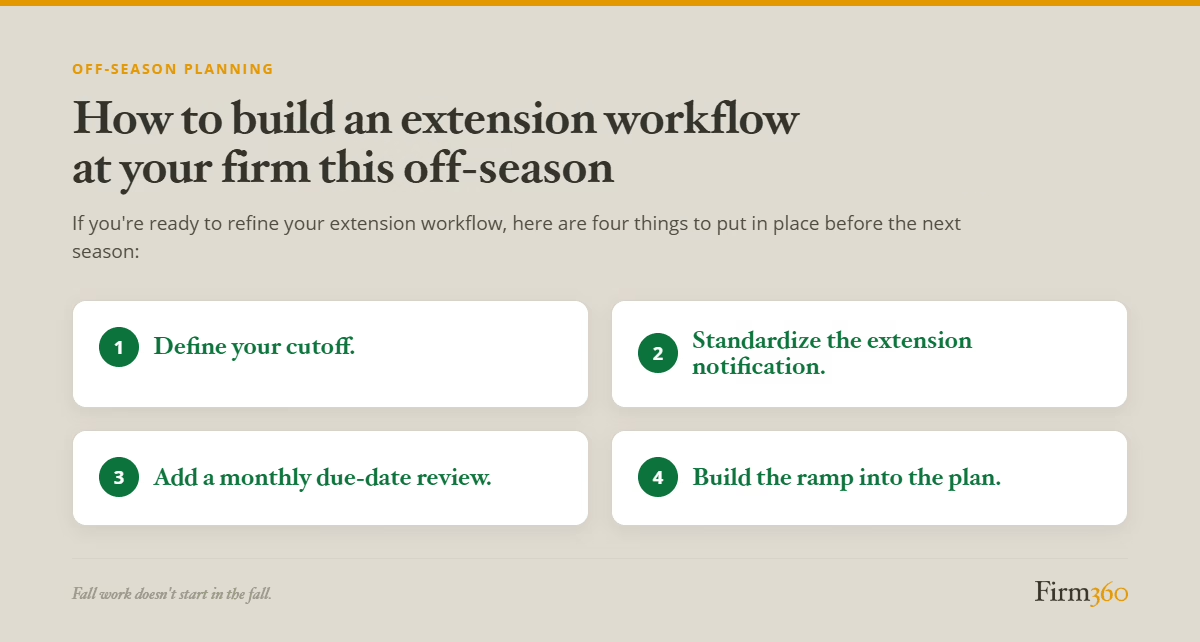
If you’re ready to refine your extension workflow, here are four things to put in place before the next season:
Define your cutoff. Pick the date, tie it to your batch filing, and document in internal policy and engagement letters that returns not ready by then get extended. A cutoff that’s a judgment call each year isn’t a cutoff.
Standardize the extension notification. One template covering what the extension changes, what the client still owes and by when, how to pay it, and the new due date.
Add a monthly due-date review. Gray’s version is a Projects report that preparers review at the start of each month.
Build the ramp into the plan. Fall work doesn’t start in the fall. Decide in advance which summer weeks carry extended returns, and assign them. Where clients are open to it, schedule return delivery in advance, which spreads the workload across the summer instead of stacking it in the fall.
Extensions Deserve a Real Workflow
An extension isn’t a mark against the firm. It’s a decision to branch work into a period where it can be done properly. What breaks is when that branch gets treated as an exit. The return leaves the active queue and nothing in the process owns bringing it back. A defined extension workflow ensures these returns are routed back into the tax preparation workflow before the final deadline.
For a broader view of how extension work fits alongside the rest of firm operations, the Firm360 practice management guide is a useful next read.
FAQs
What is a tax extension workflow?
A tax extension workflow is the defined process a firm uses to move a return into extension status, communicate the decision to the client, prepare and file the extension request, and coordinate any necessary extension payment with the client. It runs as an optional workflow within the standard tax preparation workflow.
From an operational perspective, when should a CPA firm file an extension for a client?
The best practice is to choose a pre-defined cutoff date ahead of the return filing deadline. The date varies by firm; one to two weeks ahead generally leaves enough room to prepare and transmit the batch. Common operational triggers include missing information, firm capacity constraints, or a client who wants time to work through an unexpected result. Defining the cutoff in advance keeps the decision from being made case by case under deadline pressure.
How do you manage tax extensions at scale?
Batch file rather than filing one at a time, and schedule the batch ahead of the deadline rather than against it. Calculate any estimated payments before the batch runs. Then track extended returns in a separate status.
How do you keep extended returns from being forgotten over the summer?
Give them an owner and a recurring rhythm. Automated reminders requesting missing documents continue weekly. Preparers or office managers follow up directly with clients who don’t respond to automated reminders. A monthly due-date review catches anything with an off-calendar deadline.
Expert Bio
Brandon Gray is a CPA, founding member of Banks, Gray & Crumpler, PLLC in Goldsboro, NC, and a Master of Science in Accounting graduate of East Carolina University. After years of battling clunky legacy systems in his own practice, he co-founded Firm360, a cloud-based practice management platform — giving him a front-row seat to hundreds of firms streamlining their operations. He was named one of CPA Practice Advisor’s “20 Under 40” Top Influencers in 2022. Brandon also facilitates C12 Christian CEO coaching groups in Eastern NC, serves as Assistant Chief for the New Hope Volunteer Fire Department, is a private pilot, and an avid outdoorsman with his children.